
Esophageal Cancer Surgery Cost in Jaipur: What Patients Pay and How to Plan for Treatment
Esophageal Cancer Surgery Cost in Jaipur: What Patients Pay and How to Plan for Treatment Introduction Facing esophageal cancer surgery...
Cancer Hospital in Rajasthan | Zanish Cancer Hospital
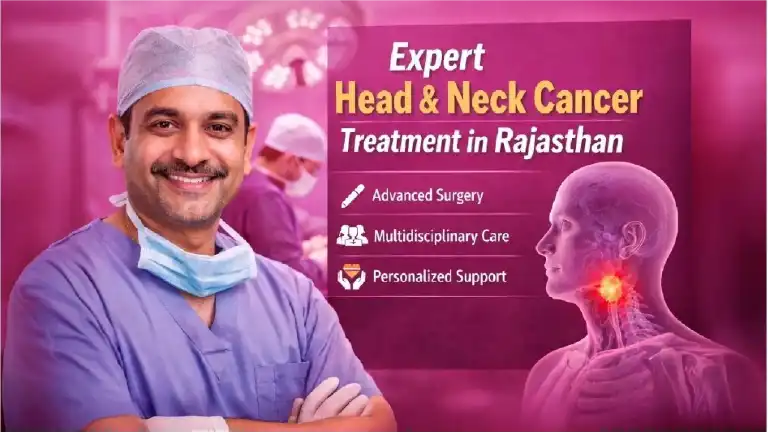
Head and neck cancers encompass malignancies affecting the oral cavity, throat, larynx, nasal passages, salivary glands, and thyroid. These cancers require specialized surgical expertise and multidisciplinary management to achieve optimal outcomes while preserving essential functions like speech, swallowing, and breathing.
Patients across Rajasthan now have access to advanced head and neck cancer treatment without needing to travel to distant metropolitan centers. Zanish Cancer Hospital provides comprehensive oncological care with experienced specialists who understand the complexities of treating cancers in these anatomically critical areas.
Head and neck cancer treatment involves a coordinated approach that may include surgery, radiation therapy, chemotherapy, targeted therapy, or immunotherapy. The treatment strategy depends on cancer type, location, stage, and the patient’s overall health status.
Surgery often plays a central role, particularly for localized tumors. Procedures range from minimally invasive endoscopic resections to complex reconstructive surgeries that restore form and function after tumor removal. The goal is complete cancer removal while maximizing quality of life and preserving vital functions.
Radiation therapy may be used before surgery to shrink tumors, after surgery to eliminate remaining cancer cells, or as primary treatment for specific cases. Chemotherapy and newer targeted therapies complement surgical and radiation approaches, particularly for advanced-stage cancers.
Early diagnosis and prompt treatment significantly improve outcomes in head and neck cancers. Delays in accessing specialized care can lead to disease progression, making treatment more complex and potentially affecting survival rates.
Having a dedicated head and neck cancer surgeon in Rajasthan means patients can receive timely evaluation and intervention close to home. This accessibility is crucial given that head and neck cancers often present with symptoms that may initially seem benign, such as persistent sore throat, difficulty swallowing, or non-healing mouth ulcers.
Regional cancer centers help bridge the gap between primary care and specialized oncology services, ensuring patients receive appropriate diagnostic workup and treatment planning without unnecessary delays.
Zanish Cancer Hospital adopts a patient-centered, evidence-based approach to head and neck cancer care. The treatment philosophy emphasizes multidisciplinary collaboration, where surgical oncologists, radiation oncologists, medical oncologists, speech therapists, nutritionists, and rehabilitation specialists work together.
Every patient receives individualized attention with treatment plans developed through multidisciplinary tumor board discussions. This collaborative process ensures all aspects of care are considered, from tumor resection techniques to functional rehabilitation and psychological support.
The hospital maintains strict adherence to safety protocols, international treatment guidelines, and ethical standards. Transparency in communication helps patients and families understand their diagnosis, treatment options, expected outcomes, and potential challenges.
Complex head and neck cancer surgeries demand specialized training and experience in oncological principles and reconstructive techniques. Dr. Nishant Sangvi, a surgical oncologist in Rajasthan, brings extensive expertise in managing head and neck malignancies with precision and care.
The surgical oncology team is trained in advanced techniques including microvascular reconstruction, which allows for restoration of tissue defects following extensive tumor resections. This expertise is essential for procedures involving oral cavity cancers, laryngeal cancers, thyroid malignancies, and salivary gland tumors.
Specialized knowledge in neck dissection procedures, sentinel lymph node mapping, and organ-preservation surgeries ensures patients receive contemporary care aligned with current oncological standards. This level of surgical expertise directly impacts both cancer control and functional outcomes.
Initial Consultation and Diagnostic Evaluation
The care journey begins with a comprehensive consultation where the medical team assesses symptoms, reviews medical history, and performs clinical examination. Diagnostic imaging including CT scans, MRI, PET scans, and endoscopy helps determine tumor extent and staging.
Biopsy confirms the cancer diagnosis and provides information about tumor type and grade, which guides treatment decisions.
Multidisciplinary Treatment Planning
Once diagnosis is established, the case is presented to a multidisciplinary tumor board comprising surgical oncologists, radiation oncologists, medical oncologists, radiologists, and pathologists. This collective expertise ensures the most appropriate treatment strategy is recommended.
Treatment Implementation
Treatment proceeds according to the personalized plan. Surgery, when indicated, is performed with focus on complete tumor removal while preserving function. Advanced reconstructive techniques may be employed simultaneously to restore appearance and function.
Post-surgical care includes close monitoring, pain management, nutritional support, and initiation of adjuvant therapies when required.
Rehabilitation and Recovery
Rehabilitation services including speech therapy, swallowing therapy, and physical therapy help patients regain function and adapt to changes following treatment. This phase is crucial for optimizing quality of life.
Long-Term Follow-Up
Regular follow-up appointments monitor for recurrence, manage treatment side effects, and provide ongoing support. Long-term surveillance is essential in head and neck cancer care.
Patients from Jaipur, Udaipur, Jodhpur, Ajmer, Bikaner, and other regions of Rajasthan choose Zanish Cancer Hospital for several reasons:
Specialized Surgical Expertise: Access to experienced head and neck cancer surgeons trained in complex oncological procedures.
Comprehensive Multidisciplinary Care: Complete diagnostic, treatment, and rehabilitation services available in one location.
Advanced Technology: Modern surgical equipment, imaging systems, and radiation therapy facilities.
Functional Rehabilitation: Dedicated speech, swallowing, and nutritional support services to optimize recovery.
Transparent Communication: Clear discussions about diagnosis, treatment options, and realistic expectations.
Regional Accessibility: Quality cancer care available within Rajasthan, reducing travel burden for patients and families.
What are common symptoms of head and neck cancer? Symptoms include persistent sore throat, difficulty swallowing, non-healing mouth sores, lump in the neck, hoarseness lasting beyond two weeks, ear pain, or unexplained weight loss. Any persistent symptom warrants medical evaluation.
How is head and neck cancer diagnosed? Diagnosis involves clinical examination, imaging studies (CT, MRI, PET scans), endoscopy to visualize affected areas, and biopsy to confirm cancer cells and determine tumor type.
What types of head and neck surgeries are performed? Surgeries range from tumor excision in the oral cavity, laryngectomy for throat cancers, thyroidectomy for thyroid cancers, to neck dissection for lymph node involvement. Reconstructive procedures may accompany tumor removal.
Will I lose my ability to speak after surgery? Not all head and neck cancer surgeries affect speech. When voice preservation is not possible, rehabilitation options including voice prosthetics and speech therapy help restore communication abilities.
How long is recovery after head and neck cancer surgery? Recovery varies based on surgery extent. Hospital stays may range from a few days to two weeks. Complete functional recovery can take several weeks to months with rehabilitation support.
Is head and neck cancer treatment available in Rajasthan? Yes, specialized head and neck cancer treatment is available at dedicated oncology centers in Rajasthan, providing access to expert surgical and multidisciplinary care.
Head and neck cancers require specialized expertise and comprehensive care to achieve the best possible outcomes. Zanish Cancer Hospital offers advanced head and neck cancer treatment in Rajasthan with a focus on surgical excellence, functional preservation, and patient-centered support.
If you or a loved one is experiencing persistent symptoms or has been diagnosed with head and neck cancer, consider consulting with the oncology team at Zanish Cancer Hospital for expert evaluation and personalized treatment planning.
Esophageal Cancer Surgery Cost in Jaipur: What Patients Pay and How to Plan for Treatment Introduction Facing esophageal cancer surgery...
Esophageal Cancer Surgery Cost in Jaipur: What Patients Pay and How to Plan for Treatment Introduction Facing esophageal cancer surgery...
Cancer Surgeon Near Jaipur: How to Find, Verify, and Book a Consultation Quickly Introduction Finding a cancer surgeon near Jaipur...