

Robotic Cancer Surgery in Rajasthan: Is It Better Than Open Surgery for Your Condition?
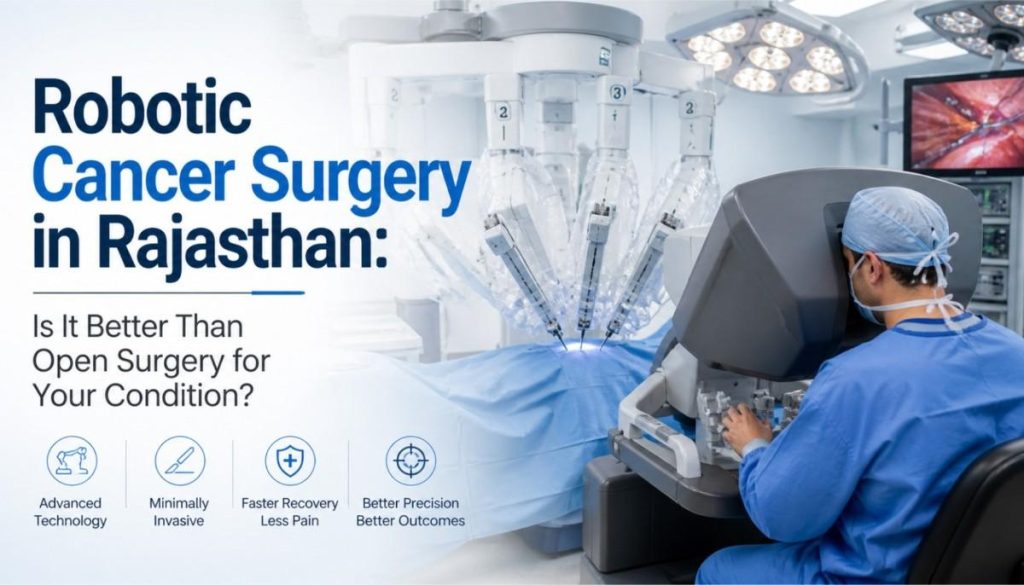
Robotic Cancer Surgery in Rajasthan: Is It Better Than Open Surgery for Your Condition? Introduction When a cancer diagnosis leads to a recommendation for surgery, many patients and families in Rajasthan face an unfamiliar question: What type of surgery is best for my situation? Robotic cancer surgery in Rajasthan is becoming an increasingly discussed option — but understanding what it actually means, and whether it is suitable for your condition, requires clear and honest information. This article explains robotic surgery in simple terms, compares it with traditional open surgery, and helps you ask the right questions when consulting your oncology team. What Is Robotic Cancer Surgery? Robotic surgery is a form of minimally invasive surgery — meaning it is performed through small incisions rather than a large opening in the body. The surgeon operates using a console that controls robotic arms fitted with precise, flexible instruments and a high-definition camera. It is important to clarify: the robot does not operate independently. The surgeon remains fully in control at all times. The robotic system simply enhances the surgeon’s precision, range of movement, and visibility in confined anatomical areas. Robotic surgery is used for several cancer types including prostate, colorectal, gynaecological, and certain abdominal cancers, depending on the stage and location of the tumour. Robotic Vs Open Surgery: Understanding The Difference Open surgery involves a larger incision to directly access the tumour. It remains the standard and most appropriate approach for many cancer cases — particularly complex, advanced, or large tumours where direct access and full visibility are essential. Robotic or minimally invasive cancer surgery, by contrast, may offer certain advantages in appropriate cases: Smaller incisions and reduced scarring Lower risk of blood loss during the procedure Shorter hospital stay in many cases Faster return to routine activities Reduced post-operative discomfort in suitable patients However, robotic surgery is not universally better. The right surgical approach depends entirely on the cancer type, stage, tumour size, patient health, and the surgeon’s clinical judgement. No single technique suits every patient. Importance Of Timely Surgical Evaluation In Rajasthan Across Rajasthan, many patients delay seeking a surgical opinion due to limited awareness of available options or uncertainty about where to go. This delay can affect the range of surgical choices available at the time of treatment. Early evaluation by a qualified surgical oncologist allows the team to assess whether minimally invasive techniques — including robotic surgery — are clinically appropriate for a given case, or whether open surgery would deliver the safest outcome. Patients from Jodhpur, Bikaner, Udaipur, Ajmer, and surrounding regions now have access to advanced cancer surgery in Jaipur and nearby centres, reducing the need to travel to distant cities. Treatment Approach At Zanish Cancer Hospital At Zanish Cancer Hospital, every surgical case is reviewed through a multidisciplinary tumour board before a procedure is recommended. This board includes surgical oncologists, medical oncologists, radiation specialists, radiologists, and pathologists — all collaborating to determine the most appropriate treatment plan. The decision between robotic, laparoscopic, or open surgery is made based on clinical evidence, not on the basis of technology availability alone. Patient safety and oncological completeness — ensuring the cancer is adequately treated — are always the primary considerations. Clinical Expertise & Leadership Dr. Nishant Sanghavi, surgical oncologist at Zanish Cancer Hospital, brings specialised training in advanced laparoscopic oncosurgery alongside his MCh qualification in surgical oncology. His experience spans complex cancer surgeries across multiple sites, including gastrointestinal, breast, and head and neck cancers. His approach reflects the hospital’s broader commitment: recommending the surgical technique that is most appropriate for the patient’s specific condition, rather than applying a one-size-fits-all approach. The Patient Care Journey Consultation — Detailed review of diagnosis, imaging, and surgical history Surgical Assessment — Evaluation of which technique is clinically appropriate Pre-operative Preparation — Anaesthesia review, patient counselling, and planning Surgery — Performed using the safest and most effective technique for the case Recovery — Inpatient monitoring, pain management, and wound care Follow-Up — Ongoing monitoring for healing, treatment response, and recurrence Throughout this journey, patients and families receive clear explanations and are encouraged to ask questions at every stage. Why Patients From Rajasthan Choose Zanish Cancer Hospital Patients across Rajasthan choose Zanish Cancer Hospital because the team provides honest guidance on treatment options — including when robotic surgery is appropriate and when it is not. This transparency builds trust, especially for patients navigating cancer care for the first time. The hospital’s integrated care model means patients do not need to coordinate between multiple providers independently. Surgical, medical, and radiation oncology services are available under one team. FAQs Q1. Is robotic surgery better than open surgery for cancer? Not always. The best surgical approach depends on your cancer type, stage, and overall health. Your surgical oncologist will recommend the technique most likely to achieve complete tumour removal safely. Q2. What is the cost of robotic cancer surgery in Rajasthan? Costs vary depending on the type of cancer, complexity of the procedure, and hospital facilities. It is advisable to discuss costs and insurance coverage directly with the hospital’s patient care team during consultation. Q3. What are the benefits of robotic surgery for cancer patients in Jaipur? In appropriate cases, robotic surgery may offer smaller incisions, reduced blood loss, shorter hospital stays, and faster recovery — but suitability must be assessed individually by a qualified surgeon. Q4. Is robotic cancer surgery available in Rajasthan? Yes. Advanced cancer surgery including minimally invasive techniques is available at dedicated oncology centres in Rajasthan, reducing the need for patients to travel outside the state. Q5. How do I know if I am a candidate for robotic surgery? A detailed consultation with a surgical oncologist, including review of your imaging and biopsy reports, is necessary to determine whether robotic surgery is appropriate for your specific case. Not always. The best surgical approach depends on your cancer type, stage, and overall health. Your surgical oncologist will recommend the technique most likely to achieve complete tumour removal safely. Costs vary depending on the
Robotic Cancer Surgery in Rajasthan: Advanced Techniques by Dr. Nishanth Sanghavi

Robotic Cancer Surgery in Rajasthan: Advanced Techniques by Dr. Nishanth Sanghavi Introduction Cancer surgery has evolved dramatically over the past two decades, with robotic-assisted techniques representing one of the most significant technological advances in surgical oncology. For patients across Rajasthan seeking cutting-edge cancer treatment, robotic cancer surgery Rajasthan offers precision, reduced recovery times, and improved surgical outcomes compared to traditional open procedures. At Zanish Cancer Hospital, this advanced surgical approach combines state-of-the-art technology with experienced clinical expertise to deliver optimal cancer care. Many Rajasthan patients remain unaware of robotic surgery availability or harbor misconceptions about its safety and effectiveness. Understanding how robotic surgical systems work, which cancers benefit most from this approach, and what realistic outcomes to expect helps patients make informed treatment decisions during an already overwhelming time. Understanding Robotic Cancer Surgery Robotic surgical systems translate a surgeon’s hand movements into precise micro-movements of miniature instruments inserted through small incisions. The surgeon operates from a console with high-definition, three-dimensional visualization of the surgical field, controlling robotic arms that perform the actual procedure with enhanced dexterity and precision. This minimally invasive cancer surgery approach differs fundamentally from traditional open surgery requiring large incisions, and even from conventional laparoscopic techniques. Robotic systems offer superior instrument articulation, tremor filtration, and magnified visualization, enabling surgeons to perform complex oncological procedures through smaller openings while maintaining surgical precision critical for complete cancer removal. Advanced cancer treatment using robotic platforms has demonstrated particular effectiveness for cancers in confined anatomical spaces including prostate, gynecological organs, colorectal tumors, and certain head and neck malignancies. The technology enables precise dissection near critical structures like nerves and blood vessels, potentially preserving function while achieving oncological goals. Advancing Surgical Oncology Access in Rajasthan Historically, patients requiring advanced surgical techniques often traveled outside Rajasthan to metropolitan centers in Delhi, Mumbai, or Bangalore. The establishment of robotic surgical oncology capabilities within the state represents significant progress in regional healthcare infrastructure. However, awareness gaps persist. Many patients and referring physicians remain unfamiliar with robotic surgery availability, appropriate patient selection criteria, and realistic outcome expectations. Educational efforts addressing these knowledge gaps help ensure suitable candidates receive timely referrals for evaluation. Geographic accessibility matters profoundly during cancer treatment when patients require multiple follow-up visits, adjuvant therapies, and long-term surveillance. Having advanced surgical capabilities available locally reduces travel burdens, enables better family support during treatment, and facilitates continuity of care with familiar clinical teams throughout the cancer journey. Robotic Surgery Integration at Zanish Cancer Hospital Zanish Cancer Hospital approaches robotic surgical oncology as one component within comprehensive, multidisciplinary cancer care rather than an isolated technological offering. Not every cancer patient requires or benefits from robotic surgery. The tumor board evaluates each case individually, recommending robotic approaches when they offer genuine advantages over alternative surgical techniques. Patient selection considers tumor characteristics, cancer stage, anatomical factors, patient health status, and oncological appropriateness. The goal remains complete cancer removal with negative margins, whether achieved through robotic, laparoscopic, or open surgical approaches. Technology serves the treatment plan rather than driving it. When robotic surgery represents the optimal approach, meticulous preoperative planning incorporates detailed imaging review, patient positioning strategies, and procedural mapping. This preparation ensures efficient, safe operations maximizing oncological outcomes while minimizing complications. The hospital maintains rigorous safety protocols, infection control measures, and quality monitoring systems ensuring consistent outcomes regardless of surgical approach. Regular outcome analysis and continuous improvement initiatives reflect institutional commitment to excellence and accountability. Clinical Experience and Surgical Expertise Best robotic cancer surgeon Rajasthan searches reflect patient desire for experienced operators comfortable with both robotic technology and oncological principles. Dr. Nishanth Sanghavi robotic surgery experience encompasses extensive training in robotic-assisted procedures across multiple cancer types. Technical proficiency develops through dedicated fellowship training, manufacturer-certified education, ongoing skill maintenance, and progressive case complexity accumulation. However, surgical expertise extends beyond console operation to include sound oncological judgment about when robotic approaches serve patients best versus alternative techniques. Dr. Nishanth Sanghavi’s practice emphasizes oncological completeness as the primary surgical goal. Robotic platforms enable achievement of this goal through minimally invasive approaches when anatomically and oncologically appropriate, but never compromise cancer control for minimally invasive benefits. This balanced perspective ensures technology enhances rather than dictates surgical decision-making. Robotic cancer surgery with Dr. Nishanth Sanghavi reflects integration of advanced techniques within evidence-based oncology practice. Patients receive thorough explanations about why specific approaches are recommended, realistic recovery expectations, and honest communication about potential risks and limitations. Patient Journey Through Robotic Cancer Surgery Preoperative EvaluationConsultation includes comprehensive assessment determining surgical approach appropriateness. Patients undergo detailed imaging, laboratory testing, and medical optimization. Clear communication about procedure specifics, recovery expectations, and realistic outcomes establishes appropriate expectations. Surgical ProcedureRobotic operations typically involve several small incisions through which instruments and camera are inserted. The surgeon operates from a console while surgical assistants manage instrument exchanges and provide bedside support. Procedures generally take similar or slightly longer duration compared to open surgery but offer visualization and precision advantages. Immediate RecoveryMinimally invasive approaches typically result in less postoperative pain, shorter hospital stays, and faster return to normal activities compared to open surgery. However, recovery experiences vary individually based on procedure extent, patient age, overall health, and cancer stage. Follow-Up and SurveillanceRegular postoperative appointments monitor healing, pathology results, and recovery progress. Additional treatments including chemotherapy or radiation are coordinated when indicated based on final pathological staging and tumor biology assessment. Why Patients Choose Zanish Cancer Hospital for Robotic Surgery Patients seeking advanced surgical options increasingly prioritize several factors beyond technology availability. Zanish Cancer Hospital has earned trust through transparent communication about robotic surgery’s genuine benefits and realistic limitations, avoiding exaggerated marketing claims common in technology-focused healthcare advertising. The hospital’s comprehensive approach ensures patients receive appropriate surgical techniques whether robotic, laparoscopic, or open based on individual circumstances rather than predetermined preferences. This flexibility demonstrates commitment to patient welfare over technology promotion. Integration of robotic capabilities within multidisciplinary cancer care means surgical decisions reflect collective expertise. Patients benefit from tumor board discussions incorporating medical oncology, radiation oncology, pathology, and radiology perspectives alongside surgical planning.
