
Minimally Invasive Cancer Surgery: Dr. Nishant Sanghavi's Laparoscopic Expertise
Introduction
For many cancer patients in Rajasthan, the word “surgery” immediately brings to mind large incisions, long hospital stays, and extended recovery periods. While this was once the reality of cancer operations, modern surgical oncology has changed significantly. Minimally invasive cancer surgery in Rajasthan is now an established option for a growing range of cancers — offering patients the same oncological precision as traditional open surgery, but through small incisions that reduce pain, lower complication risk, and allow a faster return to normal life. At Zanish Cancer Hospital, this approach is available to patients across the state under the care of a trained surgical oncology team.
What Is Minimally Invasive Cancer Surgery?
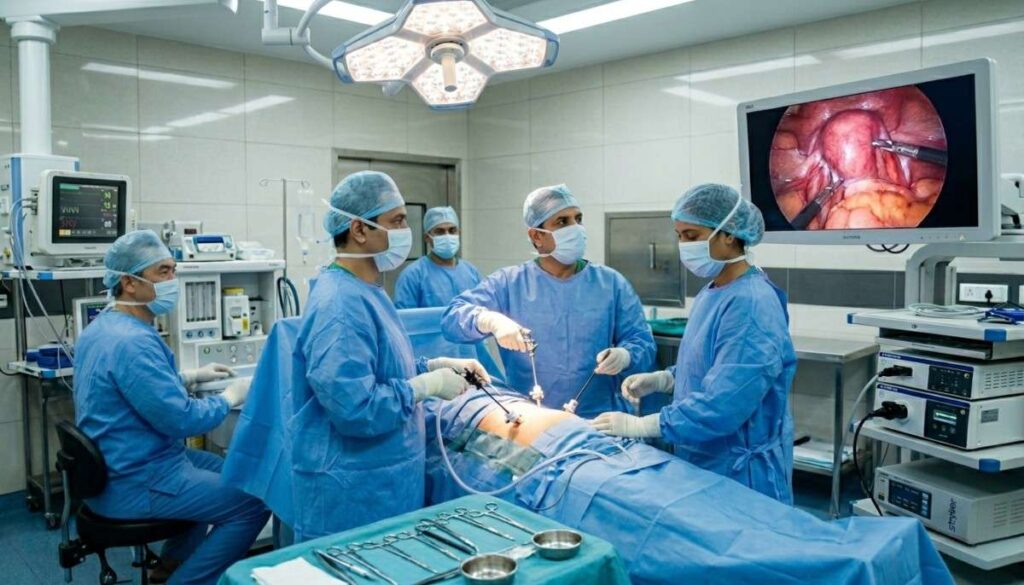
Minimally invasive surgery — commonly referred to as laparoscopic or keyhole surgery — is a technique in which operations are performed through several small incisions rather than a single large opening. A thin, flexible camera called a laparoscope is inserted through one of these incisions, transmitting a magnified, high-definition view of the internal operating area to a monitor. Surgical instruments inserted through the remaining incisions allow the surgeon to perform the procedure with precision under direct visual guidance.
In oncology, minimally invasive techniques are used to remove tumors, perform lymph node dissections, stage cancers, and in some cases, carry out complex resections of organs including the stomach, colon, rectum, liver, and gallbladder. When performed by a surgeon with appropriate training and experience, laparoscopic oncosurgery achieves the same cancer clearance standards as open surgery — with the added benefit of a less physically demanding recovery for the patient.
Why This Matters for Patients Across Rajasthan
For patients in Rajasthan — many of whom are the primary earners or caregivers in their families — a shorter recovery period is not just a medical convenience, it is a practical necessity. A faster return to daily function means less disruption to family life, reduced time away from work, and lower overall costs associated with prolonged hospitalization.
Additionally, patients who undergo minimally invasive procedures tend to experience less post-operative pain, lower rates of wound infection, reduced blood loss during surgery, and shorter inpatient stays — all of which matter significantly when managing cancer alongside the demands of daily life in cities and towns across Rajasthan.
Despite these advantages, access to trained laparoscopic oncosurgeons within the state has historically been limited. Many patients were advised to travel to larger metropolitan centers for keyhole cancer surgery — a barrier that Zanish Cancer Hospital is working to remove.
Treatment Approach at Zanish Cancer Hospital
At Zanish Cancer Hospital, the decision to use minimally invasive techniques is always based on clinical suitability — not convenience or patient preference alone. Not every cancer surgery can or should be performed laparoscopically. Tumor size, location, stage, prior surgeries, and the patient’s overall fitness are all considered before recommending an approach.
Where minimally invasive surgery is clinically appropriate, it is offered as part of a comprehensive, multidisciplinary treatment plan reviewed by the hospital’s tumor board. This collective review — involving surgical, medical, and radiation oncologists alongside radiologists and pathologists — ensures that the surgical approach selected serves the patient’s oncological needs first, with the added benefits of minimal invasiveness as a secondary gain rather than the primary driver.
Open surgery remains the preferred approach in certain complex cases, and the team at Zanish transitions between techniques based on intraoperative findings when necessary.
Clinical Expertise and Leadership
The laparoscopic oncosurgery program at Zanish Cancer Hospital is led by Dr. Nishant Sanghavi, who completed a dedicated fellowship in Advanced Laparoscopic Oncosurgery at Galaxy Care Institute, Pune — one of India’s recognized centers for minimally invasive surgical training. Combined with his MCh in Surgical Oncology from GCRI Ahmedabad and over 14 years of clinical experience, Dr. Sanghavi brings a specific and substantial skill set to laparoscopic cancer surgery across a wide range of cancer types.
His training in advanced minimally invasive techniques — including intracorporeal anastomosis, total mesorectal excision, and laparoscopic lymphadenectomy — reflects a level of specialization that was previously unavailable to most patients seeking cancer surgery within Rajasthan.
The Patient Care Journey
Patients considering minimally invasive cancer surgery at Zanish follow a structured pathway:
- Consultation: Review of symptoms, prior investigations, and medical history to assess surgical candidacy
- Diagnosis and Staging: Imaging, biopsy, and pathology to fully characterize the cancer and determine whether laparoscopic surgery is appropriate
- Pre-operative Planning: Tumor board review and detailed discussion with the patient about the planned surgical approach, expected outcomes, and recovery
- Surgery: Performed under general anaesthesia using laparoscopic or hybrid techniques as determined by the clinical plan
- Recovery: Typically shorter inpatient stay compared to open surgery, with clear wound care and activity guidance on discharge
- Follow-Up: Scheduled post-operative visits to assess healing, review pathology results, and plan any additional treatment such as chemotherapy if indicated
Patients are kept fully informed at each stage, with all findings and decisions explained in clear, accessible language.
Why Rajasthan Patients Choose Zanish Cancer Hospital
Patients from Jaipur, Jodhpur, Kota, Sikar, Ajmer, and across Rajasthan choose Zanish Cancer Hospital for minimally invasive cancer surgery because it combines specialist laparoscopic training with an honest, patient-first approach. The team does not apply keyhole techniques universally — they apply them where genuinely appropriate, with transparency about what each option involves and what the patient can realistically expect.
This combination of surgical expertise and straightforward communication gives patients the confidence to make informed decisions about their surgical care without feeling pressured or uninformed.
FAQs
Is minimally invasive cancer surgery as effective as open surgery for cancer removal?
When performed by a trained surgical oncologist for appropriate cases, laparoscopic cancer surgery achieves equivalent oncological outcomes to open surgery — with the added benefit of a less demanding recovery.
Which cancers can be treated with laparoscopic surgery at Zanish Cancer Hospital in Rajasthan?
Minimally invasive techniques are used for selected cases of colorectal, stomach, liver, gallbladder, gynecological, and other GI cancers, among others. Suitability is assessed individually for each patient.
How long is the hospital stay after laparoscopic cancer surgery?
Hospital stays vary by procedure but are generally shorter than for open surgery — typically two to five days for many laparoscopic oncology procedures, depending on the complexity and the patient’s recovery.
Is minimally invasive surgery suitable for advanced-stage cancers?
It depends on the specific case. Some advanced cancers are still suitable for laparoscopic approaches, while others require open surgery for safe and complete tumor removal. The team at Zanish assesses each case individually.
How do I know if I am a candidate for keyhole cancer surgery?
A consultation with a trained surgical oncologist, along with a review of your imaging and pathology, is needed to determine whether minimally invasive surgery is appropriate for your specific cancer type and stage.
Conclusion
Minimally invasive cancer surgery represents a meaningful advance in how cancer operations are performed — offering patients shorter recovery, less discomfort, and comparable oncological outcomes when used appropriately. At Zanish Cancer Hospital, patients across Rajasthan now have access to this surgical approach under the care of a fellowship-trained laparoscopic oncosurgeon. If you are facing a cancer diagnosis and want to understand all your surgical options, a consultation with our team is a valuable and straightforward first step.
Disclaimer: This article is intended for informational purposes only and does not constitute medical advice. Please consult a qualified surgical oncologist to determine the most appropriate treatment approach for your individual condition.
Other Posts
Esophageal Cancer Surgery Cost in Jaipur: What Patients Pay and How to Plan for Treatment
Esophageal Cancer Surgery Cost in Jaipur: What Patients Pay and How to Plan for Treatment Introduction Facing esophageal cancer surgery...
Esophageal Cancer Surgery Cost in Jaipur: What Patients Pay and How to Plan for Treatment
Esophageal Cancer Surgery Cost in Jaipur: What Patients Pay and How to Plan for Treatment Introduction Facing esophageal cancer surgery...
Cancer Surgeon Near Jaipur: How to Find, Verify, and Book a Consultation Quickly
Cancer Surgeon Near Jaipur: How to Find, Verify, and Book a Consultation Quickly Introduction Finding a cancer surgeon near Jaipur...