Introduction
Ovarian cancer is among the more challenging gynaecological cancers to detect early, largely because its initial symptoms are often vague or easy to attribute to other causes. For women across Rajasthan, this diagnostic difficulty is compounded by limited access to specialist gynaecologic oncology services in many parts of the state. Finding reliable ovarian cancer treatment in Rajasthan, from diagnosis through to surgical care and follow-up, remains a concern for many patients and their families.
Zanish Cancer Hospital seeks to address this gap by offering structured, specialist-led ovarian cancer care within the state.
Understanding Ovarian Cancer
The ovaries are two small organs in the female reproductive system responsible for producing eggs and hormones. Ovarian cancer occurs when cells in or around the ovaries begin to grow and divide abnormally. There are several types of ovarian cancer, with epithelial ovarian cancer being the most common.
Because the ovaries are located deep within the pelvis, tumours can grow for some time before causing noticeable symptoms. When symptoms do appear, they may include persistent bloating, abdominal discomfort, changes in appetite, or urinary frequency. These signs are often non-specific, which is why ovarian cancer is frequently diagnosed at a more advanced stage. This makes specialist evaluation essential whenever such symptoms persist without a clear explanation.
Importance of Timely Cancer Care in Rajasthan
Across Rajasthan, awareness of ovarian cancer symptoms remains limited in many communities. Women in semi-urban and rural areas may delay seeking care due to a lack of awareness, social factors, or difficulty accessing gynaecology specialists. This delay can result in a diagnosis at a stage where the cancer has already spread beyond the ovaries, making treatment more complex.
Early-stage ovarian cancer is generally more responsive to treatment and may allow for less extensive surgical intervention. Timely access to a qualified ovary cancer specialist can make a meaningful difference in the options available to the patient. Encouraging women to seek evaluation when persistent abdominal or pelvic symptoms arise is an important step in improving outcomes across the region.
Treatment Approach at Zanish Cancer Hospital
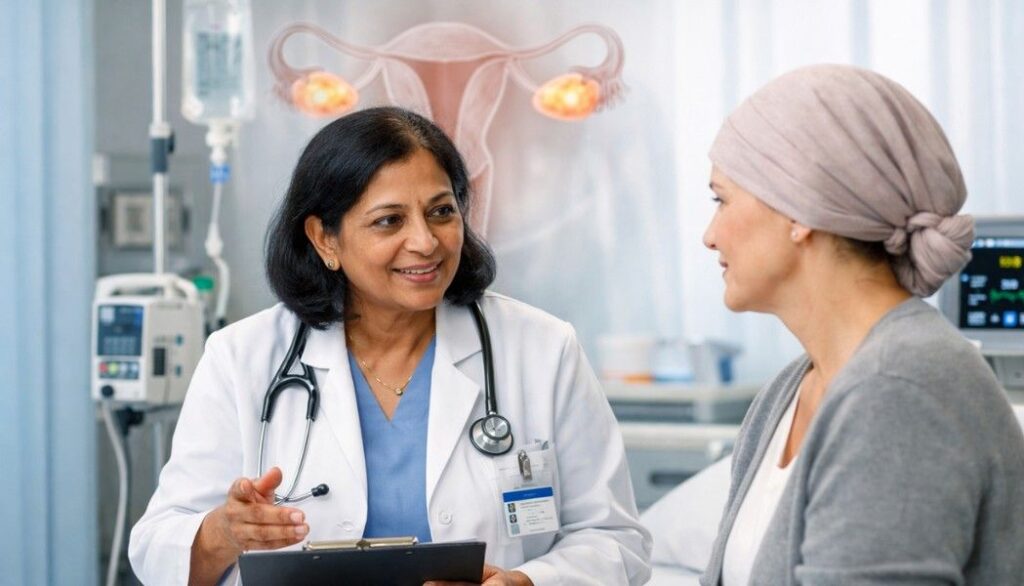
Zanish Cancer Hospital follows a multidisciplinary approach to ovarian cancer treatment. A team comprising gynaecological oncologists, medical oncologists, radiologists, and pathologists collaborates to assess each case before recommending a treatment pathway.
Ovarian cancer surgery typically involves the removal of the affected ovary or ovaries, and in many cases, the uterus and surrounding tissue as well, depending on the stage and spread of the disease. This procedure, known as cytoreductive or debulking surgery, aims to remove as much tumour tissue as possible. In selected early-stage cases, fertility-sparing approaches may be considered where clinically appropriate.
Surgery is often combined with chemotherapy, the sequencing of which is determined individually based on clinical findings. All treatment decisions at Zanish Cancer Hospital are grounded in evidence-based oncology practice.
Clinical Expertise and Leadership
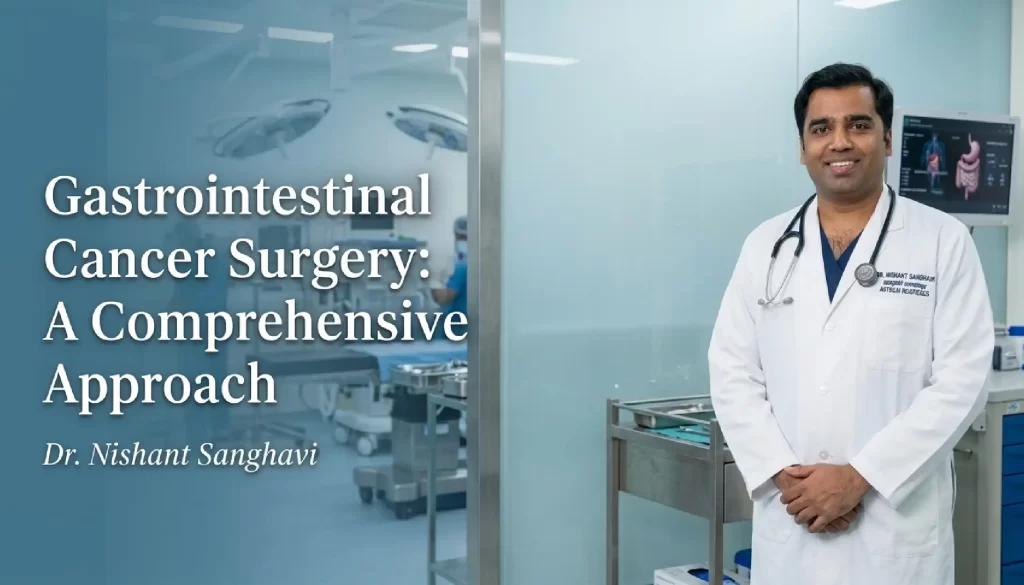
Dr. Nishant Sanghavi, surgical oncologist at Zanish Cancer Hospital, has experience managing complex gynaecological oncology cases including ovarian cancer. Patients seeking consultation for ovarian cancer surgery with Dr. Nishant Sanghavi receive a thorough clinical assessment that considers the nature of the disease, the patient’s overall health, and their individual circumstances and concerns.
His approach reflects the hospital’s broader commitment to informed, patient-centred surgical oncology care in Rajasthan.
Patient Care Journey
The care process at Zanish Cancer Hospital begins with an initial consultation, during which the patient’s symptoms and medical history are reviewed in detail. Diagnostic investigations may include blood tests such as CA-125, pelvic ultrasound, CT imaging, and in some cases, a biopsy or laparoscopic evaluation.
Once a diagnosis and staging are established, the multidisciplinary team discusses the recommended treatment plan with the patient and family. For those proceeding to surgery, pre-operative preparation and counselling are carried out with care. Post-operative recovery is monitored closely, and patients are supported through any additional treatment such as chemotherapy that follows. Long-term follow-up appointments are scheduled to monitor for recurrence and overall health.
Why Patients from Rajasthan Choose Zanish Cancer Hospital
Patients across Rajasthan choose Zanish Cancer Hospital because it provides specialist gynaecologic oncology services within the state, avoiding the need to travel to distant cities at an already stressful time. The hospital’s team-based model, transparent communication, and ethical approach to treatment planning build the confidence patients and families need when navigating a serious diagnosis.
The availability of experienced surgical oncology expertise, combined with structured support through every phase of care, makes Zanish Cancer Hospital a trusted option for ovarian cancer treatment in Rajasthan.
FAQs
What are the common signs of ovarian cancer? Persistent bloating, pelvic or abdominal discomfort, reduced appetite, and frequent urination are common symptoms. These are non-specific and should be evaluated by a doctor if they continue without explanation.
How is ovarian cancer diagnosed? Diagnosis typically involves blood tests, imaging such as ultrasound or CT scan, and may include a biopsy or surgical exploration depending on clinical findings.
Can I consult Dr. Nishant Sanghavi for ovarian cancer surgery in Rajasthan? Yes. Consultations can be arranged through Zanish Cancer Hospital via their official contact details.
Is surgery always required for ovarian cancer? Surgery is a central part of treatment for most ovarian cancer cases, but the specific approach depends on the type, stage, and individual patient factors. A full assessment is required before any recommendation is made.
Is fertility preservation possible with ovarian cancer surgery? In certain early-stage cases, fertility-sparing surgery may be an option. This is determined on an individual basis following a detailed clinical evaluation.
Conclusion
Ovarian cancer is a condition where timely specialist care can meaningfully influence the course of treatment. For women and families in Rajasthan seeking guidance, Zanish Cancer Hospital offers access to gynaecologic oncology expertise and a multidisciplinary care team within the state. If you or someone you know is experiencing persistent symptoms or has received a diagnosis, we encourage you to book a consultation and take the next step toward informed, personalised care.