
Robotic Cancer Surgery Explained: What Patients Considering Treatment Should Know
Introduction
A cancer diagnosis brings a flood of decisions, and one of the biggest is choosing how surgery will be performed. In recent years, robotic cancer surgery has become an increasingly common option discussed in consultation rooms across Rajasthan, yet many patients still aren’t sure what it actually involves. Does “robotic” mean the surgeon isn’t in control? Is it safer than traditional surgery, or just more expensive? These are fair questions, and the answers matter when you’re making decisions about your own body or a loved one’s care.
This article breaks down what robotic cancer surgery really is, how the procedure works step by step, what the evidence says about its safety and benefits, and how it compares with traditional surgical approaches — so you can have a more informed conversation with your care team.
What Is Robotic Cancer Surgery?
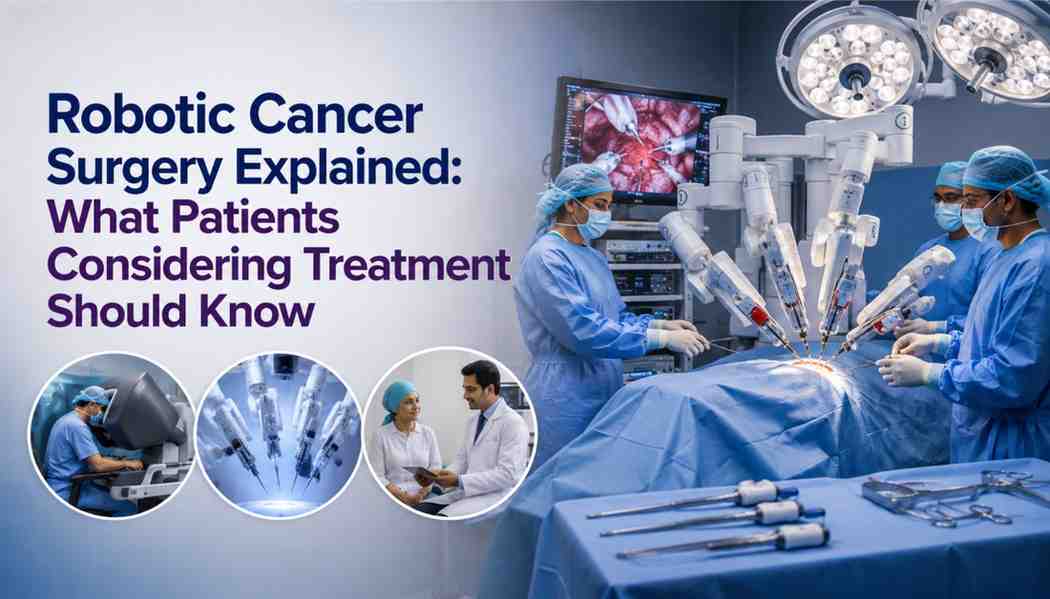
Robotic cancer surgery is a form of minimally invasive cancer surgery in which a surgeon operates using a robotic surgical system rather than making a single large incision by hand. The surgeon sits at a console a few feet from the operating table and controls robotic arms fitted with surgical instruments and a high-definition camera. Every movement the surgeon makes is translated in real time to the instruments inside the patient’s body.
It’s important to clear up a common misconception early: the robot does not operate independently, and it does not make decisions. It is a tool that extends the surgeon’s hands, offering a level of precision, range of motion, and visual magnification that can be difficult to achieve with the human hand alone.
How Robotic Surgery Differs From Traditional Surgery
Aspect | Traditional Open Surgery | Robotic Surgery |
Incision size | One large incision | Several small (keyhole) incisions |
Visualization | Direct view or standard laparoscope | 3D, high-definition magnified view |
Instrument movement | Limited by human wrist range | Enhanced range of motion, tremor filtration |
Typical hospital stay | Longer | Often shorter |
Blood loss | Generally higher | Generally lower |
Recovery time | Longer | Often faster |
This table reflects general clinical patterns reported in surgical literature; individual outcomes vary based on the patient’s condition, cancer stage, and overall health.
How Does Robotic Cancer Surgery Work?
Understanding how does robotic cancer surgery work in practice can help ease anxiety about the unfamiliar technology involved.
The Role of the Surgeon
The surgeon remains the decision-maker throughout the entire procedure. Seated at a console, the surgeon views a magnified 3D image of the surgical site and manipulates hand and foot controls that direct the robotic arms with a high degree of precision. A trained surgical team is present at the operating table at all times to assist and to intervene manually if ever needed.
Step-by-Step Overview of a Robotic Procedure
- Anesthesia and positioning: The patient is placed under general anesthesia and positioned appropriately for the specific procedure.
- Port placement: Small incisions (usually a few centimeters or less) are made to insert the robotic arms and camera.
- Console-guided surgery: The surgeon performs the operation from the console, removing or repairing tissue as required.
- Tissue removal or reconstruction: Depending on the cancer type, the surgeon may remove a tumor, surrounding tissue, or nearby lymph nodes, and may need to reconstruct affected structures.
Closure: Instruments are withdrawn and the small incisions are closed, typically requiring minimal external stitching.
Which Cancers Can Be Treated With Robotic Surgery?
Robotic-assisted techniques are used across a range of cancer types where minimally invasive access is technically appropriate, including prostate, kidney, colorectal, gynecological, and select gastrointestinal cancers, among others. Suitability depends on the tumor’s size, location, stage, and the patient’s overall health — not every case is appropriate for a robotic approach, and your surgical oncologist will assess this individually.
Robotic Surgery Benefits
Reported robotic surgery benefits generally include:
- Smaller incisions, which can mean less visible scarring
- Reduced blood loss during the procedure in many cases
- Shorter hospital stays for many patients compared with open surgery
- Faster return to daily activities for many patients
- Enhanced surgical precision, particularly valuable in anatomically complex or narrow surgical spaces
- Reduced post-operative pain for some patients, often meaning lower reliance on pain medication
These are general patterns observed across surgical practice rather than guarantees for every patient. Your specific benefit will depend on your diagnosis, anatomy, and overall health.
Is Robotic Surgery Safe?
Is robotic surgery safe is one of the most common questions patients ask, and it’s a reasonable one. Robotic surgery has been used globally for over two decades and is considered a well-established surgical approach for many cancer types when performed by appropriately trained surgical teams.
Understanding the Risks
As with any surgery, risks exist and should be discussed openly with your surgeon. These can include:
- General surgical risks such as bleeding, infection, or anesthesia-related complications
- Risks specific to the procedure and cancer type being treated
- Rare instances where a robotic procedure needs to be converted to open surgery mid-operation for safety reasons
No surgery — robotic or traditional — is risk-free, and a good surgical team will walk you through your individual risk profile before you consent to any procedure.
Robotic Surgery vs Traditional Surgery: A Comparison
When evaluating robotic surgery vs traditional surgery, the right choice isn’t about which is universally “better” — it’s about which is appropriate for your specific cancer, stage, and health status.
- Choose based on clinical suitability, not preference alone. Some tumors, due to size or location, are better managed with open surgery.
- Robotic surgery is not always faster to perform — some robotic procedures can take longer than open surgery, though recovery afterward is often quicker.
- Cost may be higher for robotic procedures due to the technology involved; this is worth discussing during consultation and treatment planning.
- Surgeon experience matters more than the platform. An experienced surgeon using the most clinically appropriate technique generally matters more than the technology itself.
What to Expect Before, During, and After Surgery
Pre-Surgical Evaluation
Before any decision is made, your care team will typically review imaging, staging information, lab results, and your general fitness for surgery. This is the right time to ask questions about whether a robotic approach is suitable for your specific case.
Recovery and Aftercare
Recovery timelines vary by procedure and individual health, but many patients undergoing robotic cancer surgery experience:
- A shorter initial hospital stay compared with open surgery
- Gradual return to light activity within days to weeks, as advised by the surgical team
- Follow-up visits for wound checks, pathology review, and further treatment planning if needed (such as chemotherapy or radiation)
Always follow your surgeon’s specific post-operative instructions, as recovery guidance is individualized.
Who Is a Good Candidate for Robotic Cancer Surgery?
Candidacy depends on factors such as tumor location and size, cancer stage, prior surgeries, overall fitness for anesthesia, and specific anatomical considerations. A thorough evaluation by a surgical oncologist is the only reliable way to determine if this approach is right for you — general online information cannot substitute for that individualized assessment.
Common Myths About Robotic Cancer Surgery
- “The robot performs the surgery on its own.” False — the surgeon controls every movement in real time.
- “Robotic surgery is only for minor procedures.” False — it is used for a range of complex cancer surgeries when clinically appropriate.
- “Robotic surgery guarantees a better outcome.” False — outcomes depend on many factors, including cancer stage, overall health, and surgical expertise, not the technology alone.
- “Recovery is always dramatically faster.” Partially true — many patients recover faster, but individual results vary.
Expert Insights
Patients evaluating surgical options are encouraged to:
- Ask their surgical oncologist directly whether their specific cancer type and stage are suitable for a robotic approach
- Request a clear explanation of the risks and benefits relevant to their individual case, not just general statistics
- Understand that surgeon experience with the robotic platform is an important factor in outcomes
- Seek a second opinion if they feel uncertain about the recommended approach — this is a normal and encouraged part of cancer care
Discuss cost, insurance coverage, and expected recovery timeline as part of overall treatment planning, not as an afterthought
Key Takeaways
- Robotic cancer surgery is a minimally invasive technique where the surgeon controls robotic instruments in real time — the robot does not operate independently.
- Benefits often include smaller incisions, less blood loss, and potentially faster recovery, though results vary by patient and procedure.
- It is generally considered safe when performed by trained surgical teams, but all surgery carries some risk.
- Not every cancer or patient is suitable for a robotic approach; suitability is determined case by case.
- The choice between robotic and traditional surgery should be guided by clinical appropriateness, discussed thoroughly with your surgical oncologist.
Frequently Asked Questions (FAQs)
1. What is robotic cancer surgery?
Costs vary significantly based on surgical complexity, hospital stay, and individual treatment needs. A personalized estimate from your treating hospital after diagnostic evaluation offers the most accurate picture.
2. How does robotic cancer surgery work?
The surgeon operates from a console, controlling robotic arms that hold surgical instruments and a camera inserted through small incisions in the patient’s body.
3. Is robotic surgery safe?
It is a well-established surgical approach used globally for many cancer types, though like any surgery it carries risks that should be discussed with your surgeon.
4. How is robotic surgery different from laparoscopic surgery?
Both are minimally invasive, but robotic systems offer enhanced 3D visualization, greater instrument range of motion, and tremor filtration compared with standard laparoscopic tools.
5. Does robotic surgery guarantee better cancer outcomes?
No. Outcomes depend on the cancer type, stage, patient health, and surgical expertise — the technology is a tool, not a guarantee.
6. How long does recovery take after robotic cancer surgery?
Recovery varies by procedure and patient, but many people experience a shorter hospital stay and quicker return to light activity compared with open surgery.
7. Which cancers can be treated using robotic surgery?
Several cancer types, including certain prostate, kidney, colorectal, and gynecological cancers, may be suitable, depending on individual case factors.
8. Is robotic surgery more expensive than traditional surgery?
It can be, due to the specialized technology involved. This is worth discussing with your care team and insurance provider during treatment planning.
9. Can every patient undergo robotic surgery?
No. Suitability depends on tumor characteristics, cancer stage, and overall health, and is determined through individual evaluation.
10. What happens if complications arise during robotic surgery?
Surgical teams are trained to convert to open surgery if needed for patient safety, and this possibility is typically discussed as part of informed consent.
11. How do I know if robotic surgery is right for me?
The only reliable way is a thorough consultation with a qualified surgical oncologist who can review your specific diagnosis and health status.
12. Does robotic surgery reduce scarring?
Generally, yes — because it uses small incisions rather than one large incision, scarring is often less prominent than with open surgery.
Conclusion
Robotic cancer surgery represents a meaningful evolution in surgical technique, offering many patients the possibility of smaller incisions, reduced blood loss, and a potentially faster return to daily life. But it isn’t a one-size-fits-all solution — the right surgical approach depends on your specific cancer, its stage, and your overall health. The most important step isn’t choosing a technology; it’s having an honest, thorough conversation with a qualified surgical oncology team who can guide you toward the option that gives you the best possible care.
Call-to-Action
If you or a loved one are exploring surgical options for a cancer diagnosis, the team at Zanish Rajasthan is here to help you understand your choices clearly and compassionately. Book a consultation with our surgical oncology specialists to discuss whether robotic cancer surgery may be appropriate for your specific case — and get the personalized guidance you deserve as you move forward with your treatment journey.
Other Posts
How Robotic Surgery Reduces Recovery Time After Cancer Treatment
Robotic Surgery Recovery Time: How It May Support Recovery After Cancer Treatment For patients undergoing cancer surgery, recovery is an...
What to Ask Before Choosing a Robotic Cancer Surgery Team
What to Ask Before Choosing a Robotic Cancer Surgery Team What Makes a Good Robotic Cancer Surgery Team? A strong...
Cost of Robotic Cancer Surgery: What Determines the Price
10 Early Signs of Colon Cancer You Should Never Ignore Introduction When cancer surgery is recommended, understanding the financial aspect...