
Robotic Surgery for Colon Cancer: Procedure, Recovery, and Outcomes
Introduction
A colon cancer diagnosis brings a lot of decisions in a short amount of time, and surgery is often at the center of the treatment plan. If you’ve been reading about robotic surgery for colon cancer and wondering whether it’s the right choice, whether it’s actually safer, or what recovery really looks like, you’re asking exactly the right questions.
This article walks through how robotic colon cancer surgery works, what shapes recovery time, and — honestly — what actually determines a good outcome, because it’s rarely the surgical technology alone. Our goal here is to give you a clear, grounded understanding so that when you speak with your surgical oncologist, you’re having an informed conversation rather than guessing based on search results.
What Is Robotic Surgery for Colon Cancer?
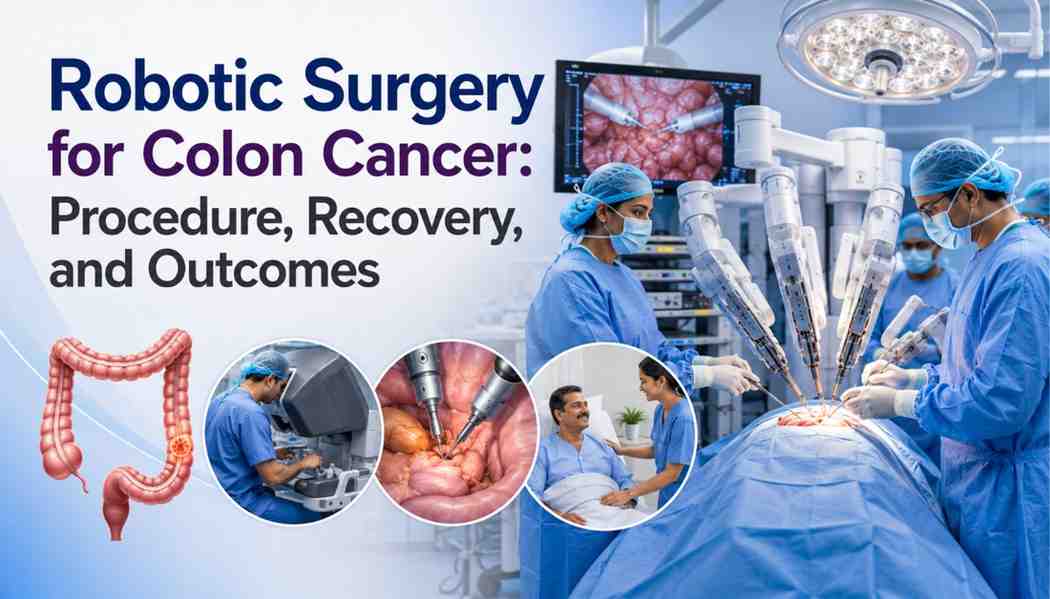
Robotic surgery for colon cancer is a minimally invasive surgical approach where the surgeon operates using a robotic system’s console, controlling instruments inserted through several small incisions rather than one large one. A high-definition 3D camera gives the surgeon a magnified view of the colon and surrounding tissue, while the robotic arms translate hand movements with added precision and a wider range of motion than manual laparoscopic tools typically allow.
Robotic Colectomy Explained
A robotic colectomy refers specifically to the surgical removal of part or all of the colon using this robotic-assisted technique. Depending on the tumor’s location, this might be described more specifically — for example, a right colectomy, left colectomy, or sigmoid colectomy — each referring to which section of the colon is removed.
How the Procedure Works
Step-by-Step Overview
- Anesthesia and positioning: The patient is placed under general anesthesia and positioned to allow optimal abdominal access.
- Port placement: Small incisions are made for the robotic camera and instrument arms.
- Console-guided surgery: The surgeon, seated at the console, mobilizes the affected section of colon and identifies relevant blood vessels and lymph nodes.
- Resection: The cancerous section of the colon, along with an adequate margin of healthy tissue and nearby lymph nodes, is removed.
- Reconnection (anastomosis): In most cases, the remaining healthy sections of colon are reconnected; in select cases, a temporary stoma may be needed.
- Closure: Instruments are withdrawn, and the small incisions are closed.
Minimally Invasive Colon Surgery: Where Robotic Fits In
Minimally invasive colon surgery is a category that includes both laparoscopic and robotic techniques. Robotic surgery is essentially an evolution of laparoscopic surgery, offering:
- Wristed instruments with a greater range of motion than straight laparoscopic tools
- A magnified, stable 3D view compared with standard laparoscopic cameras
- Reduced hand tremor through the robotic interface
Both approaches aim to achieve the same oncological outcome — thorough removal of the tumor and relevant lymph nodes — through smaller incisions than open surgery.
Robotic Colectomy Recovery Time
Hospital Stay and Early Days
Many patients undergoing a robotic colectomy experience a shorter hospital stay than those undergoing open surgery, often aided by smaller incisions, reduced blood loss, and generally less post-operative pain. Early recovery typically focuses on:
- Gradual reintroduction of food and fluids
- Monitoring bowel function as it returns
- Pain management and early mobilization, which supports recovery
Returning to Normal Activities
Recovery timelines vary by individual health, extent of surgery, and whether additional treatment such as chemotherapy is planned afterward. Many patients return to light activities within a few weeks, though your surgical team can give you a more specific estimate based on your case.
What Influences Outcomes in Colon Cancer Surgery
This is one of the most important things for patients to understand: outcomes in colon cancer surgery are shaped by many factors working together, not by the surgical technology alone. These include:
- Cancer stage at diagnosis — earlier-stage cancers generally have different outcome profiles than more advanced disease
- Completeness of tumor and lymph node removal, which depends on surgical technique and skill regardless of the platform used
- Patient’s overall health going into surgery
- Whether additional treatment, such as chemotherapy, is needed and completed as planned
- Follow-up care and surveillance after surgery
Robotic technology can support precision and recovery, but it does not replace the importance of these broader factors.
A note on “success rates”: You may see the phrase “robotic surgery colon cancer success rate” searched frequently. It’s worth knowing that success rates for colon cancer surgery are generally reported by cancer stage and specific clinical factors, not by surgical technique alone. Reliable, current statistics should come from your own care team, tied to your specific diagnosis, rather than general figures found online.
Is There a "Best" Surgery Option for Colon Cancer?
There’s no single best surgery option for colon cancer that applies to everyone. The right approach depends on:
- The tumor’s size, location, and stage
- Whether the cancer has spread to nearby structures
- The patient’s overall health and fitness for surgery
- The surgical team’s experience with a given technique
- Practical factors like recovery goals and access to robotic-trained surgical teams
A technique that’s excellent for one patient’s tumor may not be appropriate for another’s. This is why a personalized surgical consultation matters more than searching for a universal “best” answer.
Benefits of Robotic Colon Cancer Treatment
Commonly reported benefits of robotic colon cancer treatment include:
- Smaller incisions and less visible scarring
- Often reduced blood loss during surgery
- Frequently shorter hospital stays
- Enhanced precision, particularly useful for complex or anatomically challenging tumor locations
- Potentially quicker return to daily activities for many patients
These are general patterns from surgical practice, not guarantees — your surgeon can explain which of these are realistic for your specific case.
Risks and Considerations
As with any surgery, risks exist and should be discussed with your care team, including:
- General surgical and anesthesia-related risks
- Risk of anastomotic leak (where the reconnected bowel doesn’t heal as expected), a recognized risk across colon surgery techniques
- Possible need for a temporary stoma in select cases
- Rare conversion to open surgery during the procedure if needed for safety
Who Is a Suitable Candidate?
Suitability depends on tumor stage, location, prior abdominal surgeries, and overall fitness for surgery and anesthesia. This can only be properly determined through evaluation by a surgical oncologist who reviews your imaging, staging, and health history.
Common Myths About Robotic Colon Surgery
- “Robotic surgery has a guaranteed higher success rate.” False — outcomes depend primarily on cancer stage, completeness of surgery, and follow-up care, not the technology alone.
- “It’s automatically the best option for every patient.” False — clinical suitability, not general preference, should guide the decision.
- “The robot operates independently.” False — the surgeon controls every movement throughout the procedure.
- “Recovery is guaranteed to be faster.” Partially true — many patients recover faster, but individual results vary based on health and extent of surgery.
Expert Insights
Before deciding on a surgical approach, patients are encouraged to ask their surgical oncology team:
- Is my specific tumor suitable for a robotic approach, and why or why not?
- What experience does your team have with robotic colectomies for cases like mine?
- What does a realistic recovery timeline look like for me, given my age and health?
- Will I need additional treatment such as chemotherapy after surgery, and how does that factor into my overall plan?
- What specific risks apply to my case, beyond the general risks of surgery?
Seeking a second opinion is a reasonable and often encouraged step when facing a decision of this significance.
Key Takeaways
- Robotic surgery for colon cancer is a minimally invasive technique offering precision and smaller incisions, with the surgeon in full control at all times.
- Recovery is often faster than open surgery for many patients, though timelines vary by individual case.
- Surgical outcomes depend on cancer stage, completeness of tumor removal, overall health, and follow-up care — not on the surgical technology alone.
- There is no single “best” surgery option for every colon cancer patient; suitability is determined case by case.
Success rate figures should come from your own care team based on your specific diagnosis, not general online statistics.
Frequently Asked Questions (FAQs)
1. What is robotic surgery for colon cancer?
It’s a minimally invasive surgical technique where the surgeon controls robotic instruments from a console to remove the cancerous section of the colon through small incisions.
2. What is a robotic colectomy?
It’s the robotic-assisted surgical removal of part or all of the colon, named based on which section is removed (e.g., right or left colectomy).
3. What is the recovery time for a robotic colectomy?
Many patients experience a shorter hospital stay and quicker return to light activity compared with open surgery, though recovery varies based on individual health and extent of surgery.
4. What is the success rate of robotic surgery for colon cancer?
Success in colon cancer treatment depends primarily on cancer stage and completeness of treatment rather than surgical technique alone; your oncology team can provide statistics specific to your diagnosis.
5. Is robotic surgery the best option for colon cancer?
There is no universal “best” option — suitability depends on your specific tumor characteristics, stage, and overall health.
6. How does robotic surgery differ from laparoscopic colon surgery?
Robotic surgery offers a magnified 3D view and instruments with greater range of motion, while laparoscopic surgery uses straight instruments and is a well-established, generally lower-cost alternative.
7. Will I need a stoma after robotic colon cancer surgery?
Most patients undergo reconnection of the colon during the same surgery, though a temporary stoma may be needed in select cases depending on individual factors.
8. Is robotic colon surgery safe?
It is a well-established approach when performed by trained surgical teams, though like all surgery it carries risks that should be discussed individually with your surgeon.
9. How long does robotic colon cancer surgery take?
Procedure length varies depending on tumor location and complexity; your surgical team can give you a case-specific estimate.
10. Will I need chemotherapy after robotic colon cancer surgery?
This depends on the cancer’s stage and specific pathology findings after surgery, and will be discussed as part of your overall treatment plan.
11. What determines whether I'm a candidate for robotic surgery?
Tumor stage, location, size, prior surgeries, and overall health are evaluated by a surgical oncologist to determine candidacy.
12. How do I decide between robotic and other surgical options for colon cancer?
This decision should be made directly with your surgical oncology team, based on your specific diagnosis — not general comparisons found online.
Conclusion
Robotic surgery for colon cancer offers real, well-documented advantages for many patients — smaller incisions, often faster recovery, and enhanced surgical precision. But it’s important to understand that a good outcome depends on far more than the surgical platform: cancer stage, completeness of treatment, and consistent follow-up care all play a central role. Rather than searching for a universal “best” option, the most valuable step is an honest, detailed conversation with a qualified surgical oncology team who can assess your specific case and guide you toward the approach that gives you the best possible path forward.
Call-to-Action
If you or a loved one are exploring surgical options for a colon cancer diagnosis, the team at Zanish Rajasthan is here to help you understand your choices with clarity and compassion. Book a consultation with our surgical oncology specialists to discuss whether robotic surgery may be right for your specific case, and take the next step in your treatment journey with confidence.
Other Posts
How Robotic Surgery Reduces Recovery Time After Cancer Treatment
Robotic Surgery Recovery Time: How It May Support Recovery After Cancer Treatment For patients undergoing cancer surgery, recovery is an...
What to Ask Before Choosing a Robotic Cancer Surgery Team
What to Ask Before Choosing a Robotic Cancer Surgery Team What Makes a Good Robotic Cancer Surgery Team? A strong...
Cost of Robotic Cancer Surgery: What Determines the Price
10 Early Signs of Colon Cancer You Should Never Ignore Introduction When cancer surgery is recommended, understanding the financial aspect...