
Robotic Surgery for Gynaecological Cancer in Jaipur: Benefits, Risks, and Recovery Compared
Introduction
As surgical technology advances, more women diagnosed with gynaecological cancers are asking an important question: is robotic surgery an option for me? For patients seeking robotic gynaecological cancer surgery in Jaipur, understanding how it compares to traditional open surgery — honestly and clearly — is essential before any decision is made. At Zanish Cancer Hospital, we believe patients should receive a balanced, evidence-based explanation of all surgical options, not just the most advanced one.
Understanding Robotic Surgery in Gynaecological Oncology
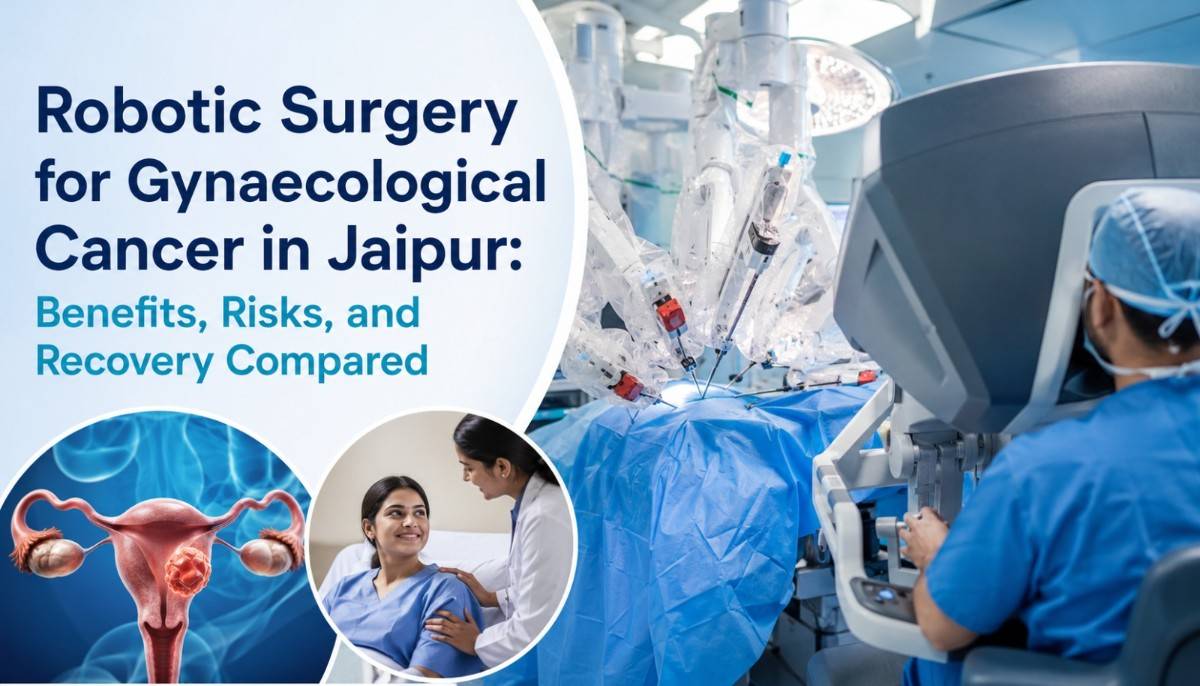
Robotic surgery is a form of minimally invasive surgery where the surgeon operates using a console that controls highly precise robotic arms fitted with surgical instruments and a high-definition camera. It is not performed by a robot independently — the surgeon remains fully in control throughout.
In gynaecological oncology, robotic surgery may be used for procedures such as hysterectomy for uterine or cervical cancer, surgical staging, and lymph node dissection. It offers greater precision and range of movement in confined pelvic spaces compared to conventional laparoscopic instruments.
Compared to open surgery, robotic surgery generally offers:
- Smaller incisions and reduced blood loss
- Less post-operative pain
- Shorter hospital stay
- Faster return to daily activities
- Lower risk of wound complications
However, robotic surgery is not universally superior. It may not be appropriate for advanced-stage cancers requiring extensive debulking, patients with complex prior abdominal surgeries, or cases where open access is clinically necessary for complete tumour removal. Suitability must be assessed individually.
Why Access to Advanced Surgical Options Matters in Rajasthan
Minimally invasive and robotic surgical options for gynaecological cancers have historically been concentrated in large metro hospitals outside Rajasthan. Many women in the state — including those in Jaipur and surrounding regions — have had limited access to these techniques at dedicated oncology centres.
For women with early to intermediate stage gynaecological cancers, access to minimally invasive women’s oncology surgery can meaningfully reduce recovery burden and improve quality of life post-treatment. Knowing that these options are available closer to home in Rajasthan is information that matters — particularly for patients who would otherwise need to travel far from their families for care.
Treatment Approach at Zanish Cancer Hospital
At Zanish Cancer Hospital, gynaecological cancer surgeries — including robotic and laparoscopic procedures — are planned through a multidisciplinary oncology team that includes surgical oncologists, gynaecological oncology specialists, medical oncologists, and radiation oncologists.
The surgical approach for each patient is selected based on:
- Cancer type, stage, and location
- Whether complete tumour removal is achievable minimally invasively
- The patient’s overall health and fitness for surgery
- Prior surgical history and anatomical considerations
Robotic surgery is offered where it is clinically appropriate — not as a default premium option. Open surgery remains the recommended approach for cases where it provides a more complete oncological result. Patients receive an honest explanation of why one approach is recommended over another.
Clinical Expertise and Leadership
Dr. Nishant Sanghavi, Surgical Oncologist at Zanish Cancer Hospital, has experience in minimally invasive and open gynaecological oncology surgeries. For women in Rajasthan asking whether robotic surgery is better for gynaecological cancer, the answer is: it depends on your specific diagnosis, stage, and anatomy. A consultation with a specialist — where your imaging and pathology are reviewed directly — is the only reliable way to determine the most appropriate surgical approach for your case.
The Patient Care Journey
- Consultation — Cancer type, staging reports, and surgical history reviewed by the oncology team
- Diagnosis and Staging — MRI, CT, PET scan, and biopsy to confirm diagnosis and assess surgical planning
- MDT Review — Team discussion on whether robotic, laparoscopic, or open surgery is most appropriate
- Surgery — Performed by a trained surgical oncologist with full pre- and post-operative protocols
- Recovery — Robotic and laparoscopic procedures typically allow discharge within 1–3 days; open surgery may require 4–6 days. Return to routine activities is generally faster with minimally invasive approaches
- Follow-Up — Pathology review, adjuvant therapy planning if needed, and long-term monitoring
Why Rajasthan Patients Choose Zanish Cancer Hospital
- Access to robotic and laparoscopic gynaecological oncology within Rajasthan
- Clinically guided surgical selection — the right technique chosen for the right case
- MDT oversight on all gynaecological cancer treatment decisions
- Transparent comparison of surgical options explained without pressure
- Specialist women’s oncology care in Jaipur serving patients from across the state
Frequently Asked Questions (FAQs)
Q1. Is robotic surgery better for gynaecological cancer in Rajasthan?
Robotic surgery offers advantages in precision and recovery for eligible patients, particularly in early to intermediate stage gynaecological cancers. However, it is not universally better — advanced cases or complex anatomies may be better served by open surgery. Your surgeon will recommend the most appropriate approach based on your individual case.
Q2. What is the recovery time for robotic gynaecological cancer surgery?
Most patients who undergo robotic surgery are discharged within 1–3 days and return to light daily activities within 2–3 weeks. Full recovery depends on whether adjuvant therapy follows. Open surgery typically involves a longer hospital stay of 4–6 days and a recovery period of 4–6 weeks.
Q3. What are the risks of robotic surgery for gynaecological cancer?
As with any major surgery, risks include bleeding, infection, and anaesthesia-related complications. Robotic surgery carries a small risk of conversion to open surgery if complications arise intraoperatively. Your surgeon will explain all risks specific to your procedure during the pre-operative consultation.
Q4. How do I know if I am a candidate for robotic surgery for ovarian or uterine cancer in Jaipur?
Candidacy depends on your cancer’s stage and location, overall health, body habitus, and surgical history. A specialist review of your staging scans and pathology at a dedicated oncology centre is required to determine suitability.
Q5. Is robotic gynaecological cancer surgery available in Rajasthan?
Yes. Zanish Cancer Hospital in Jaipur offers robotic and minimally invasive gynaecological oncology surgeries for eligible patients. Women from across Rajasthan are welcome to schedule a consultation with our oncology team.
Conclusion
Robotic surgery represents a meaningful advancement in gynaecological cancer care — but it is a tool, not a universal solution. The right surgical approach depends on each patient’s unique diagnosis, stage, and circumstances. What matters most is that you receive an honest, specialist assessment before your surgery date.
At Zanish Cancer Hospital, we offer women across Rajasthan access to the full range of gynaecological oncology surgical options — with every recommendation guided by clinical evidence and your individual needs. If you would like to understand whether robotic surgery is right for your situation, we welcome you to book a consultation with our oncology team.
Other Posts
Is Robotic Surgery Safe for Older Cancer Patients?
Is Robotic Surgery Safe for Older Cancer Patients? Robotic-assisted surgery is a form of minimally invasive surgery in which the...
How Robotic Surgery Reduces Recovery Time After Cancer Treatment
Robotic Surgery Recovery Time: How It May Support Recovery After Cancer Treatment For patients undergoing cancer surgery, recovery is an...
What to Ask Before Choosing a Robotic Cancer Surgery Team
What to Ask Before Choosing a Robotic Cancer Surgery Team What Makes a Good Robotic Cancer Surgery Team? A strong...